
From long journeys to local economic opportunity: Lentam Ntarawe’s gum arabic journey
Updated: Sep 7

For more than a decade, Lentam Ntarawe has been part of the Gum Arabic trade in northern Kenya. What began around 2013 as a small business selling to traders has today grown into a livelihood that supports not only his family, but also many collectors within his community.
Before structured buyers entered the market, business was difficult. Collectors often travelled long distances searching for buyers willing to purchase Gum Arabic. The process was exhausting, unpredictable, and time-consuming. For many families, the lack of reliable markets meant irregular income and limited opportunities to meet household needs.
“People used to walk for many kilometers to find where to sell the gum,” he explained during an interview at the Acacia EPZ Prepayment Launch in Archer’s Post. “Now it has become easier because collection happens closer to the community.”
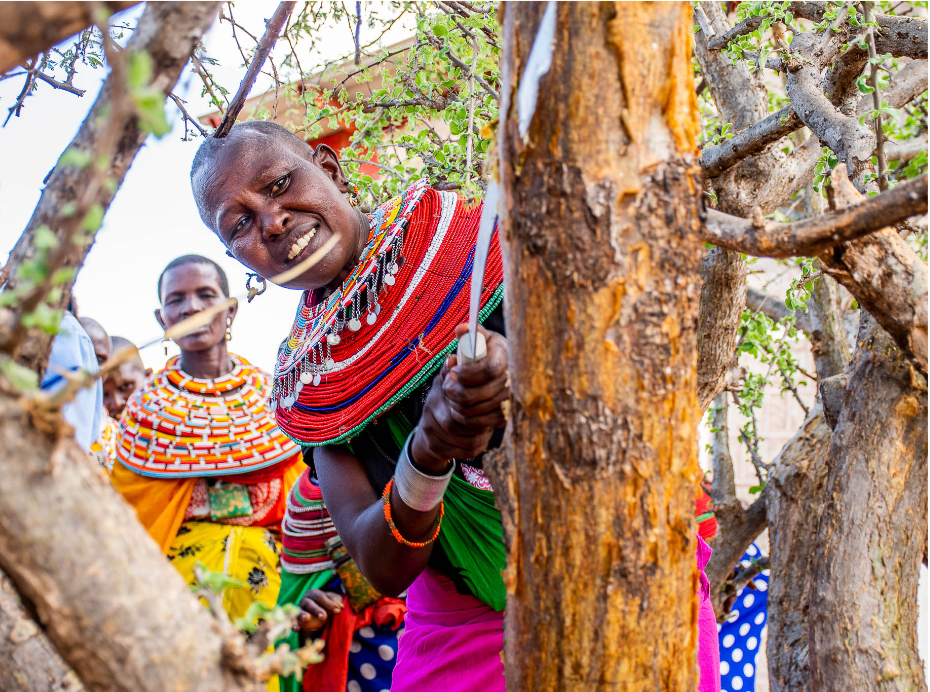
Today, Lentam works closely with collectors who harvest Gum Arabic from surrounding areas. Once collectors bring the product to him, they receive payments that help enable them to meet their families’ needs such as food, clothing, and children’s education.
Over the years, he has witnessed his business create economic opportunities for many people in the community. More collectors have joined the value chain, and households have increasingly dependent on the income generated from the trade.
Through the Sustainable Urban Economic Development (SUED) Programme funded by UK aid and implemented by FSD Kenya, agents and aggregators can now access prepayments that improve liquidity and reduce one of the biggest challenges they previously faced — lack of working capital.
This recently introduced prepayment programme is expected to further strengthen the sector. For many local businesspeople like Lentam, access to capital is gradually becoming less of a barrier, allowing collectors to be paid faster, building trust within the value chain, and increasing business volumes.
With this capital support, Lentam now plans to expand his business and strengthen the economic future of his family and the community. He says he wants to support his sons to become more established financially through the Gum Arabic trade so that their families do not experience the poverty and economic hardships that have affected many households within the region for generations.
For Lentam, partnerships supporting the sector have played an important role in improving local businesses. He particularly appreciates the efforts at making financing more accessible to agents and collectors operating in remote areas.
However, challenges remain. Transport and distance continue to affect many communities involved in the trade, especially those located far from collection centres and roads. To him, improving prices for Gum Arabic would help collectors and agents earn more sustainable incomes.
Despite the challenges, Lentam remains committed to the business and hopeful about its future prospects.His own sons are already involved in the Gum Arabic trade — a sign of the confidence he has in the sector’s long-term potential. He also encourages young people to engage directly with trusted buyers and avoid brokers who often exploit collectors.
Stories like Lentam’s demonstrate how locally anchored enterprises can create opportunity, resilience, and economic inclusion within Kenya’s ASAL communities.
Comments