
From the margins to markets: Unlocking growth in Kenya’s ASALs
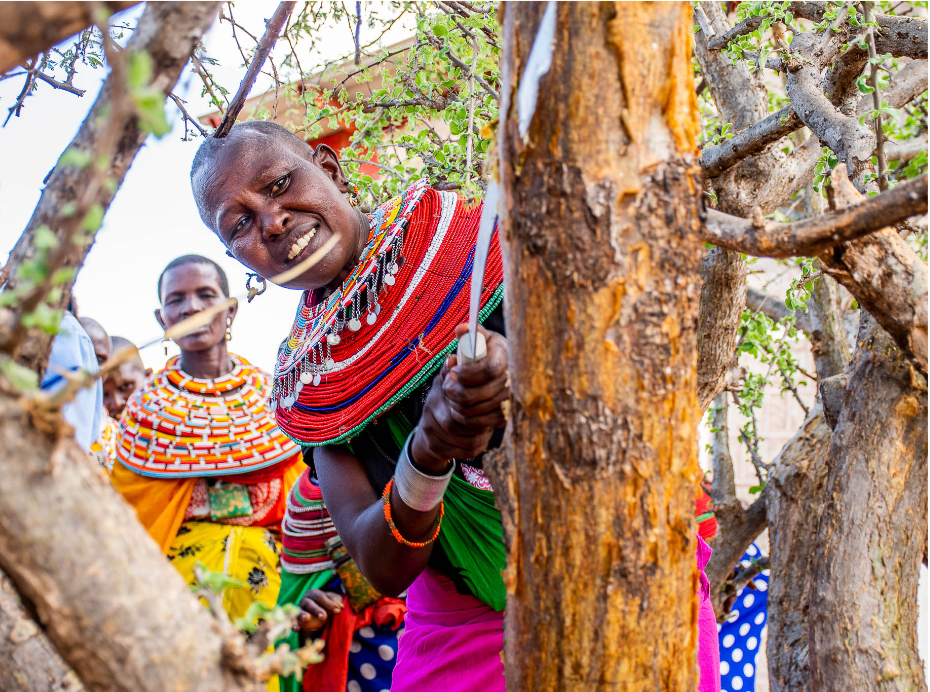
In many discussions about economic transformation in Kenya’s Arid and Semi-arid Lands (ASALs), attention is often directed to infrastructure, drought resilience, humanitarian assistance, or livestock systems.
These are all important considerations but there is another question we should be asking more seriously: What does it actually take to deliver economic opportunity at the last mile? Not in theory. Not in policy documents. But in practice for the collector, trader, aggregator, or small-scale entrepreneur operating far from formal markets and financial systems.
This question came into sharp focus during recent engagements in the Gum Arabic value chain in northern Kenya.
For years, Gum Arabic has quietly supported livelihoods across ASAL counties. Yet despite growing international demand, the people at the very beginning of the value chain often remain financially constrained. Many operate within informal systems where access to affordable capital, liquidity, storage, transport, and formal banking remains limited.
What becomes clear very quickly is that the challenge is not simply production, the challenge is working capital. Collectors may have access to the product, markets may exist and demand may be rising. But if aggregation agents cannot access liquidity quickly enough, the entire chain is constrained. Collectors wait longer for payment, volumes are reduced, trust weakens and households divert business capital to immediate needs. Economic opportunity becomes fragmented before it fully materialises. This is why financing mechanisms at the local level matter far more than we sometimes acknowledge in development programming.
In many ASAL economies, informal financial systems already exist and function with surprising sophistication. Communities have long developed trust-based structures, savings mechanisms, and trading arrangements adapted to pastoralist and semi-nomadic realities. The mistake is often assuming inclusion only begins when formal systems arrive. In reality, meaningful inclusion happens when formal systems learn to work with existing local informal systems rather than replacing them. This is one reason the growing focus on prepayment and revolving financing models within agricultural and natural resource value chains deserves attention. These approaches are not simply about cash flow. They are about reducing friction at the points where local economies typically stall.
Broader lessons exist
Economic exclusion is not always caused by lack of effort or lack of enterprise. Sometimes it is caused by timing mismatches between harvest and payment, demand and liquidity, local production and market access. Bridging these gaps can unlock significant local productivity.
There is also a wider climate resilience dimension that deserves greater reflection.
Arid and semi-arid lands (ASAL) conversations are often framed primarily around vulnerability. Yet many of the livelihoods emerging within these regions are inherently adaptive and climate responsive. Value chains linked to dryland ecosystems, such as Gum Arabic, demonstrate how environmental restoration and income generation can reinforce one another when structured responsibly. This creates a different development narrative for ASAL regions — one that moves beyond coping mechanisms toward investment-led resilience.
However, resilience cannot be built only through projects. It requires functioning ecosystems of trust, finance, logistics, local institutions, and long-term market confidence. This is where partnerships become critical. Private sector actors understand market realities. Financial institutions bring systems and scale. Counties provide enabling environments. Communities contribute knowledge and legitimacy. Development programmes can help absorb early-stage risk and catalyse coordination where markets alone may initially hesitate.
But perhaps the most important shift needed is conceptual. We must stop viewing last-mile communities only as beneficiaries of development interventions and start recognising them as economic actors operating within systems that already contain value, innovation, and resilience.
The real task is not introducing potential into ASAL economies. The potential is already there. The task is reducing the barriers that prevent it from compounding.
Initiatives such as the Acacia EPZ prepayment programme demonstrate how targeted partnerships can help unlock economic potential within ASAL regions in practical and locally grounded ways. The Sustainable Urban Economic Development (SUED) Programme, funded by UK Aid and implemented by FSD Kenya, has provided catalytic support to strengthen Acacia EPZ’s growth ambitions. This support has made it possible to improve aggregation systems, expand access to working capital, and increase inclusion within the Gum Arabic value chain.
The partnership reflects a broader approach to development — one that supports locally anchored enterprises capable of creating jobs, improving livelihoods, strengthening climate resilience, and expanding economic participation for communities that are often excluded from mainstream financial and non-financial market systems.


Comments